
Commercial CCTV Drain Surveys
WinCan reports and MSCC5 coding for sewers, highways and commercial pipelines.
Need a Commercial Drain or Sewer Surveyed?
Tell us the diameter, the site and whether the line is holding water.
Commercial drain surveys
CCTV Drain Surveys for Sewers, Highways and Commercial Sites
A commercial CCTV drain survey films the inside of a drain, sewer or pipeline and turns that footage into a coded report. Civil Connect carries these surveys out for local authorities, utilities, civil engineering contractors, developers and commercial asset owners across the UK.
The report is issued in WinCan and coded to MSCC5. Where the pipe is under a road, the same survey is formatted for the Drainage Data Management System (DDMS). A graded culvert condition survey is a separate job, booked as a culvert inspection. Surveys under the carriageway are covered on our highway drainage surveys (DDMS) page, and where the drain runs need to be located and drawn alongside other buried services, see PAS 128 utility mapping.
What the Report Includes
- WinCan footage of the pipe
- MSCC5 codes for structural defects and service condition
- Location and depth for the asset record
- DDMS data when the survey is on the highway network

What Is Included in a Commercial CCTV Drain Survey
- Agreeing the lines, chambers and access before the camera is launched
- The right camera for the pipe: push-rod, crawler or float raft
- WinCan footage of each surveyed length
- MSCC5 defect coding with structural and service condition grades
- Location and depth of the pipe for the asset record, plus DDMS data on the highway network
Where silt or debris would stop the camera, cleaning is booked separately as drain jetting.
WRC MSCC5 Defect Coding
MSCC5 is the fifth edition of the Manual of Sewer Condition Classification, published by WRc. It gives every defect a standard code, such as cracks, fractures, displaced joints, roots, deposits and collapses, and records where it sits in the pipe. Each length is then given structural and service condition grades from 1 to 5, so asset owners can compare pipes on a like-for-like basis and plan work by priority. Our reports are produced in WinCan using MSCC5 coding.
Sectors We Survey For
Our CCTV teams work for clients in transport and highways, water utilities, rail infrastructure, environmental and flood defence, ports and marine, construction and development, and education and healthcare estates. We are fully insured with £5 million public liability cover and hold professional indemnity insurance. PPE is worn at all times on site.
Cameras and Pipe Sizes
- Pan-and-tilt crawlers for pipes from 225mm to 2000mm, up to 500 metres from one entry
- Push-rod cameras for smaller pipes and tight bends
- Float cameras where the pipe is surcharged and a crawler cannot run
- Explosion-proof cameras and 3D imaging where the site needs them
For CSOs, manholes and structural audits, see specialised asset surveys and structural integrity and condition auditing (WRC). A silted line that has to be opened before the camera can pass is drain jetting or culvert cleaning, not the survey itself.

High Water and Surcharged Pipes
Where the water level stops a crawler, floatable CCTV rafts carry a pan-tilt-zoom camera and lighting. They are used on large-diameter culverts, tunnels and surcharged pipelines, and record the pipe from the crown down to the waterline.
On site
How a Commercial CCTV Drain Survey Is Carried Out
The same sequence on a highway sewer, a commercial yard or a development site.
-
Confirm the Line
Diameter, chambers, access and whether the pipe is holding water are agreed before the camera is launched.
-
Run the Right Camera
A push-rod covers small pipes and bends. A crawler covers 225mm to 2000mm. A float raft is used when the pipe is surcharged.
-
Code What the Camera Sees
Defects are coded to MSCC5 as the survey runs, including cracks, displaced joints, roots, debris and collapses.
-
Issue the Report
You receive the WinCan footage and the coded report. Highways surveys are also issued in DDMS format.
Where it is used
Commercial CCTV Surveys Across the UK
Condition data for the organisations that own or work on the network.
Highways and Roads
Surveys under the carriageway, formatted for DDMS so the highway authority can load the data.
Utilities and Public Sewers
MSCC5 reports for sewer networks, including length, defects and the service condition of the pipe.
Commercial Sites
Yards, business parks and occupied buildings, surveyed from the chambers without opening the ground.
Developments and Contractors
A condition record before works start. Pre-construction checks are set out on the pre-construction survey page.
Related capabilities
Related Survey Services
CCTV of drains and sewers sits next to culvert inspection, pre-construction checks and highways surveys.
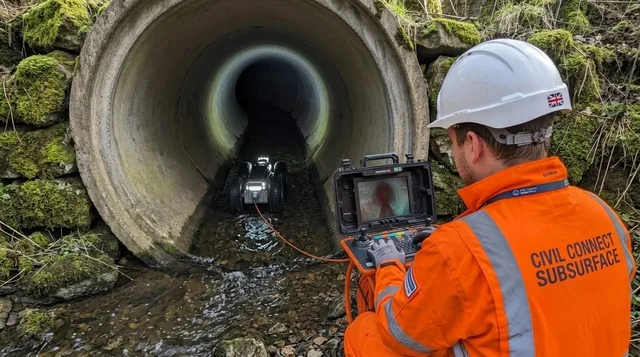
Culvert Inspections
Graded condition surveys of culverts.
Explore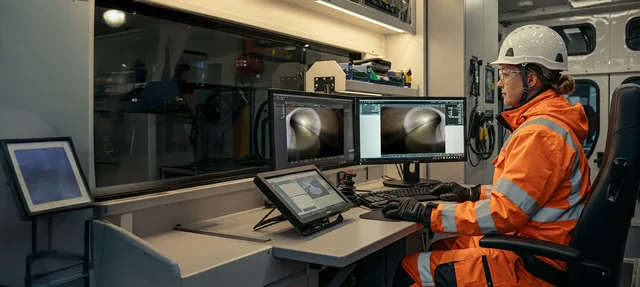
Pre-Construction Drain Surveys
Drain records before construction starts.
Explore
Highway Drainage Surveys (DDMS)
Highway drainage data in DDMS format.
Explore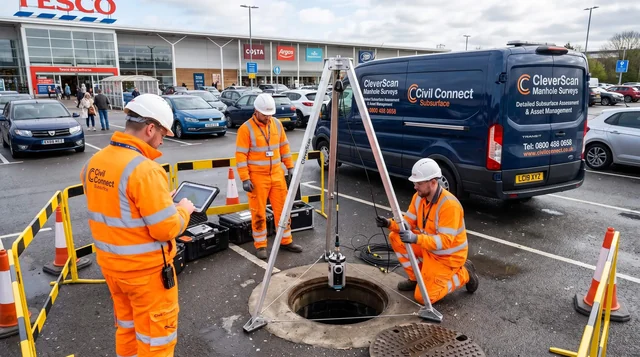
Manhole Inspections & Surveys
Chambers, CSOs and structural audits.
ExploreCommon questions
Commercial CCTV Drain Survey Questions
What Does a Commercial CCTV Drain Survey Include?
WinCan footage, an MSCC5 condition report, and the location and depth of the pipe. On the road network the data is also formatted for DDMS.
How Does a CCTV Drain Survey Work?
The camera is launched from a chamber and travels the pipe. A push-rod, crawler or float is chosen from the diameter and the water level. Defects are coded to MSCC5 and issued as a WinCan report.
What Reporting Standard Do You Use?
Reports are delivered in WinCan and coded to MSCC5. Highways surveys are formatted to Drainage Data Management System (DDMS) requirements.
What Pipe Sizes Can You Survey?
Pan-and-tilt crawlers cover pipes from 225mm to 2000mm, up to 500 metres from one entry. Push-rod cameras cover smaller pipes and tight bends.
Can You Survey a Flooded or Surcharged Pipe?
Yes. Where a crawler cannot run, a float raft carries a pan-tilt-zoom camera and lighting. A graded culvert survey is booked as a culvert inspection.
Who Are Commercial CCTV Drain Surveys For?
Local authorities, utility companies, civil engineering contractors, property developers and commercial property owners.
Can You Survey Highway Drainage?
Yes. Surveys under the carriageway are formatted for the Drainage Data Management System (DDMS) so the highway authority can load the data. See highway drainage surveys (DDMS).
What If the Pipe Is Too Silted for the Camera to Pass?
A silted line has to be opened first. That is drain jetting or culvert cleaning, booked separately from the survey itself.
Can You Record Drain Condition Before Construction Starts?
Yes. A survey gives developers and contractors a condition record before works start. See pre-construction drain surveys.
What Is MSCC5?
MSCC5 is the fifth edition of the Manual of Sewer Condition Classification, published by WRc. It sets the codes used to describe defects in drains and sewers and grades the structural and service condition of each length from 1 to 5.
Do You Clean the Drain Before the Survey?
If silt or debris would stop the camera, the line has to be jetted first. That cleaning is booked separately from the survey itself.
Which Sectors Do You Carry Out CCTV Surveys For?
Transport and highways, water utilities, rail, environmental and flood defence, ports and marine, construction and development, and education and healthcare estates.
Are Your Survey Teams Insured?
Yes. We are fully insured with £5 million public liability cover and hold professional indemnity insurance. PPE is worn at all times on site.
Talk to a specialist
Book a Commercial CCTV Drain Survey
Send the site, the pipe size if you know it, and whether the line is holding water. The office line is 01442 966880.