Which Industries Require Confined Space Training?
Any organisation whose people enter, or work at the opening of, a confined space needs confined space training, and that covers far more industries than most expect: water and sewerage, drainage, highways, rail, telecoms, construction, energy, chemicals, food and drink, agriculture and facilities management. The legal test is not the industry but the space: whether it is enclosed and carries a foreseeable specified risk. This guide explains what counts as a confined space, what the law requires and what effective training covers.
What Counts as a Confined Space?
HSE describes a confined space as one which is both enclosed or largely enclosed and has a reasonably foreseeable specified risk of fire, explosion, loss of consciousness, asphyxiation or drowning. The Confined Spaces Regulations 1997 list examples including any chamber, tank, vat, silo, pit, trench, pipe, sewer, flue, well or other similar space.
Industries Where Confined Space Work Is Routine
| Sector | Typical confined spaces |
|---|---|
| Water, sewerage and drainage | Sewers, manholes, wet wells, pumping stations, interceptors, culverts, storage tanks |
| Highways and rail | Culverts, drainage chambers, catch pits, cable troughs, tunnels and service ducts |
| Telecoms and power | Underground chambers, cable tunnels, substation basements |
| Construction | Excavations, trenches, shafts, tunnels, voids in structures |
| Process, chemicals and energy | Vessels, reactors, tanks, boilers, ductwork |
| Food, drink and agriculture | Silos, vats, slurry pits, fermentation and storage tanks |
| Facilities management | Plant rooms, ceiling and floor voids, attenuation tanks, lift pits |
What the Law Requires
The Confined Spaces Regulations 1997 set a clear hierarchy:
Avoid entry. No person at work shall enter a confined space to carry out work unless it is not reasonably practicable to achieve that purpose without such entry. Remote methods such as CCTV, sonar, ROV and long-reach tools should be considered first.
Safe system of work. If entry is unavoidable, it must follow a safe system of work based on a risk assessment, usually controlled by a permit to work.
Rescue arrangements. The regulations require suitable and sufficient arrangements for the rescue to be in place before anyone enters. HSE stresses that it is not enough to rely on the emergency services.
What Good Confined Space Training Covers
HSE says employers should make sure the person doing the work is capable and trained in both the work and the use of any emergency equipment. In practice, courses are matched to the level of risk and usually cover:
recognising confined spaces and specified risks;
risk assessment, isolation and permits to work;
gas monitoring and ventilation;
use of escape and, where needed, working breathing apparatus;
entry, top-person and supervisor roles;
emergency and rescue procedures, including practical drills;
refresher training at regular intervals.
Nationally recognised qualifications are graded by risk, from low-risk shallow entry through to high-risk work requiring breathing apparatus and rescue teams. Choose the level that matches the spaces your teams actually enter.
Reducing the Need for Entry
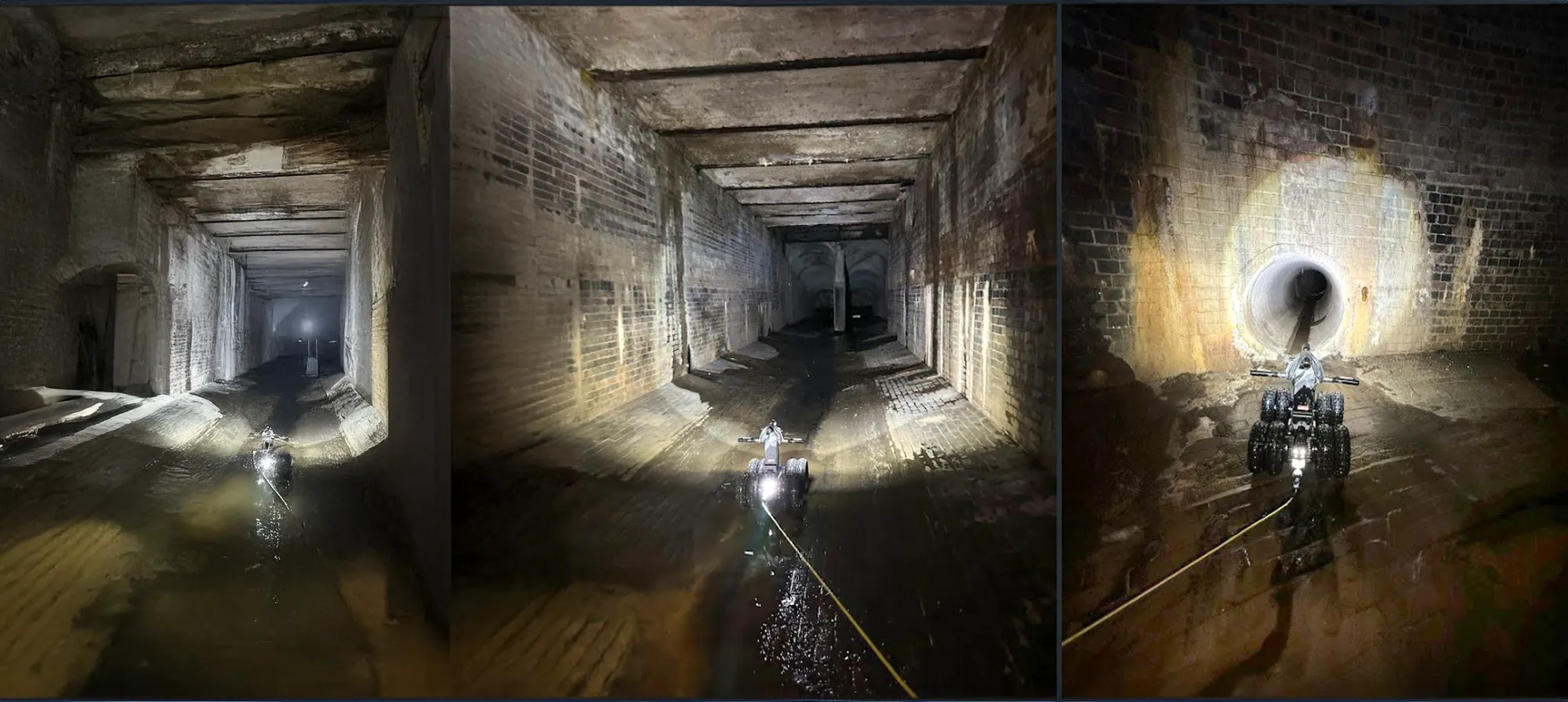
The safest confined space entry is the one that never happens. Our confined space surveys, CCTV, ROV inspection and sonar capture condition data remotely, and our wet well and interceptor cleaning crews work to permit-controlled systems when entry is unavoidable.
Frequently Asked Questions
Is a Manhole a Confined Space?
It can be. If it is enclosed and has a foreseeable specified risk, such as toxic gas or rising water, it is a confined space and the regulations apply.
Do Workers Standing at the Opening Need Training?
Yes. Top persons and supervisors are part of the safe system of work and rescue plan and must be trained for their role.
How Often Should Training Be Refreshed?
Set a refresher interval based on risk, typically every few years, with practical rescue drills more often.
Need Confined Space Work Carried Out Safely?
Civil Connect Subsurface Solutions provides confined space surveys, inspection and maintenance for utilities, highways, rail and industrial clients nationwide, and holds ISO 45001. Contact us or call 01442 966880.
Talk to a specialist
Need Expert Support with Your Drainage or Subsurface Assets?
From surveys and mapping to trenchless repairs and 24/7 response, our engineers deliver nationwide.